
PEEK is increasingly used for custom PEEK implants in facial reconstruction and augmentation. It can be manufactured from a patient’s CT data, allowing the implant to follow the shape of the underlying bone. PEEK is also radiolucent and has mechanical and chemical properties that make it useful in craniofacial surgery. [1] [2]
The newer discussion is about what happens at the implant surface. Standard PEEK is relatively bio-inert, while bioactive PEEK facial implants are modified to encourage a stronger interaction with bone or surrounding tissues. The concept is promising. The clinical evidence is still developing. [1] [3]
FacialNexus helps patients explore both standard and bioactive custom PEEK facial implants by connecting them with an independent implant designer and qualified surgeon. The appropriate material and design depend on your individual anatomy and surgical goals.
Key takeaways
- Standard PEEK is biocompatible, chemically inert, and otherwise well suited to FPSIs, but lacks a bioactive surface that naturally allows bone to attach to it.
- Bioactive PEEK surfaces can be created by altering the surface or underlying structure of PEEK in order to improve biological response. Modifications using hydroxyapatite, surface treatments, and porosity have been used.
- Improved bone response has been seen with certain modified PEEK surfaces in experimental settings, though these results have generally been established in benchtop or animal models, as opposed to large clinical trials performed on the human face.
- Improved biological response may be desirable if long term osseointegration is the main clinical goal. Standard PEEK’s lack of bioactivity may continue to be desirable when the possibility of future revision and PSI exchange is considered.
What is standard PEEK?
A patient-specific facial implant material
PEEK stands for polyetheretherketone. It is a high-performance polymer used in craniofacial surgery because of its biocompatibility, mechanical properties, chemical stability, and compatibility with imaging. [1] [2]
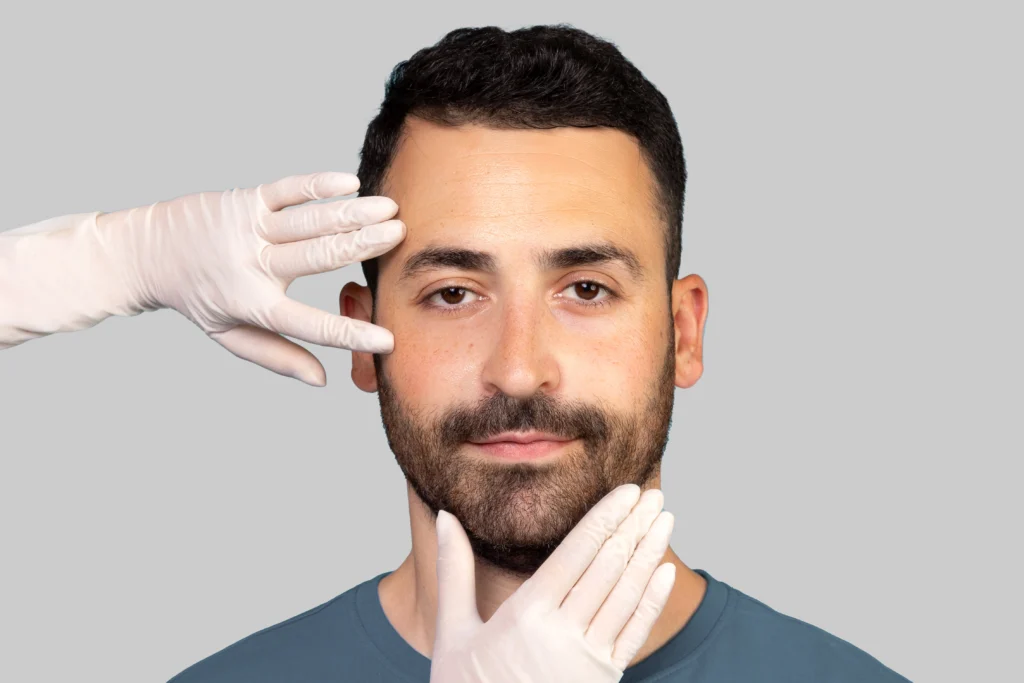
For facial surgery, a PEEK implant can be designed from CT or other three-dimensional imaging. Published studies have described patient-specific PEEK implants for areas including the mandible and midface. [2] [4]
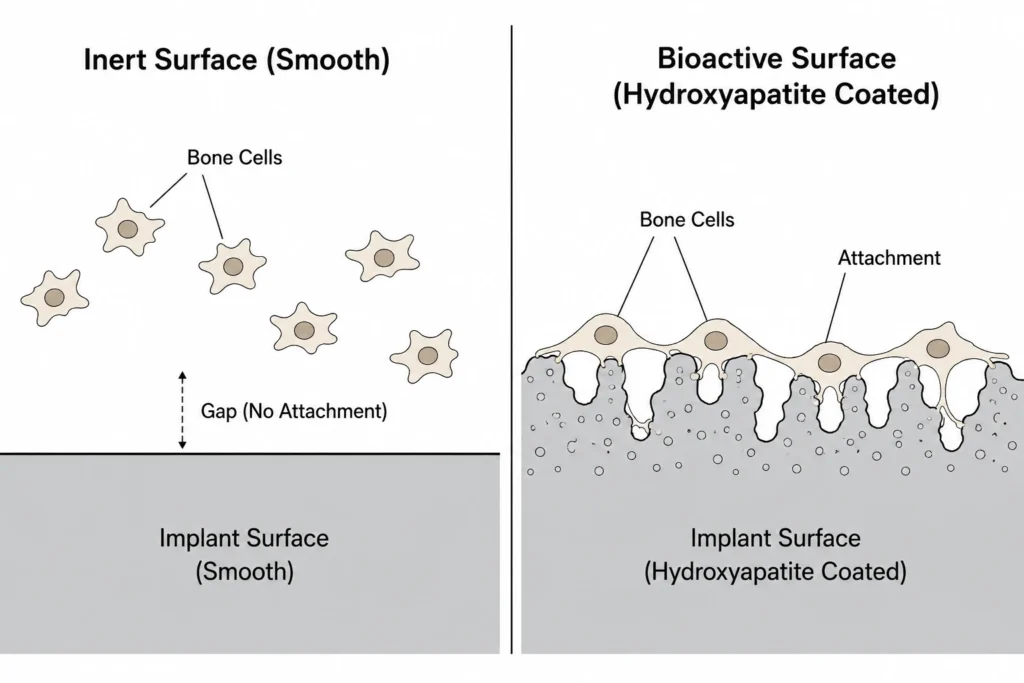
Standard PEEK is relatively bio-inert. Its surface does not naturally encourage the same degree of bone attachment seen with some bioactive materials. This is one reason researchers have spent years studying ways to modify it. [1] [3]
That does not make standard PEEK unsuitable. It simply means the implant is mainly acting as a stable structural material rather than actively encouraging bone growth at its surface.
For patients considering standard custom PEEK facial implants, FacialNexus can connect you with independent specialists who develop personalized implant plans based on your facial structure and desired changes.
What is bioactive PEEK?
Changing how the surface interacts with tissue
Bioactive PEEK can be defined as PEEK modified for improved biological response. Hydroxyapatite coatings, chemical modifications, roughened surfaces and porous structures have all been investigated. [3] [5] [6]
Hydroxyapatite has received particular attention as it is a mineral found in natural bone. Surface or compositional incorporation of hydroxyapatite into PEEK has been studied. [3] [5]
The goal is quite straightforward. Enhance the cell/protein/new bone friendliness of the PEEK surface.
FacialNexus also helps patients explore bioactive PEEK facial implant options through independent implant designers and surgeons. They can assess whether a surface-modified implant is appropriate and available for your particular case.
Does bioactive PEEK integrate better with bone?
What the experimental studies show
The research is encouraging, but most of it is not facial clinical research.
A review of PEEK surface modification studies found that many modified surfaces improved the interaction of PEEK with bone and soft tissue in cell and animal experiments. The same review also noted that most of the available evidence was based on laboratory work or short-term studies in small animals. [3]
A rabbit study of nano-hydroxyapatite-coated PEEK found greater average bone-to-implant contact than with uncoated PEEK. The study was small, used femoral implants, and also reported implant losses related to primary stability. [5]
Other experimental studies have reported similar effects with different surface treatments. The overall direction of the research is toward making PEEK less biologically inert. [6]
Human facial evidence is still limited
This is where marketing claims can get ahead of the evidence.
The authors of a 2024 systematic review on PEEK for craniofacial reconstruction/augmentation included 32 articles with 194 patients. They referred to PEEK as having been described as useful for patient specific facial implants but lacked biological activity. Ideas for coatings and modifications such as hydroxyapatite, titanium coatings, and porous designs were discussed as possibilities.
At the time of publication, there were no published facial cases using modified/coated PEEK that the authors knew of in the clinical literature they reviewed. [1]
Bioactive PEEK as a facial implant is best thought of as an emerging technology.
Could stronger integration matter for long-term results?
The theory behind bio-integration
A patient-specific PEEK implant already provides a custom three-dimensional shape. Surface modification addresses a different issue. It changes how the implant interacts with the tissues around it. [1] [2]
If a modified surface improves bone contact, the implant may develop a closer biological relationship with the underlying skeleton. That could be useful when long-term integration is the main design goal. [3] [5] [6]
This is also the idea behind the term “bio-integration” used in patient-facing discussions of facial implant materials. The concept is that the material should interact more closely with the surrounding anatomy rather than remaining biologically inert. [7]
That concept should not be confused with proof of a better-looking result. There are not yet strong comparative human studies showing that bioactive PEEK produces a more natural facial appearance than standard PEEK.
What about fibrous tissue?
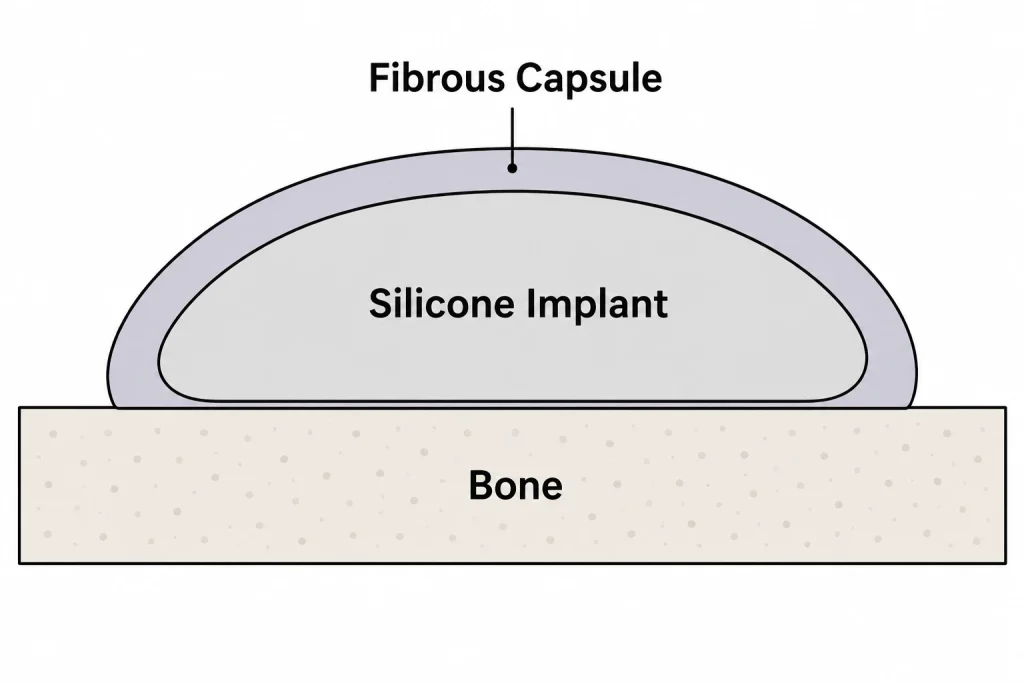
The goal is less of a barrier around the implant
Standard PEEK can produce a fibrous tissue response because its surface is relatively inert. Surface modification research has explored whether this response can be reduced while improving bone contact. [1] [3] [6]
Some experimental studies have reported less fibrous tissue formation around modified PEEK surfaces. These findings are useful for understanding the material, but they should not be turned into claims such as “no scar tissue.” Human facial evidence does not support that statement. [1] [3]
What is the downside of stronger integration?
Revision may become more involved
There is a trade-off worth discussing.
Standard PEEK is not specifically designed to bond strongly to bone. A bioactive surface is designed to promote more interaction with bone. If that integration is stronger, separating the implant from the surrounding bone during a later revision could be more involved. [3] [5] [6]
However, there is an important limitation. Direct clinical studies comparing removal of standard and bioactive PEEK facial implants are not available. The revision difference is therefore a reasonable planning consideration based on implant biology, not a proven clinical advantage. [1] [3]
When might standard PEEK make more sense?
Revisability can influence material choice
Standard PEEK remains a useful option for patient-specific facial implants. Clinical studies have reported its use in craniofacial reconstruction and facial contour correction, including implants designed from CT imaging. [2] [4]
It may be attractive when the surgeon wants the benefits of patient-specific PEEK without intentionally adding a surface designed to promote stronger bone attachment. For some patients, that may fit the long-term plan better.
If you’re considering standard PEEK for chin, jawline, or cheek augmentation, FacialNexus can connect you with an independent designer and surgeon to discuss a custom implant tailored to your anatomy and aesthetic goals.
When does bioactive PEEK make sense?
When tissue integration is the priority
From a materials engineering perspective, bioactive PEEK is the more advanced approach when the main goal is to improve interaction between the implant and bone. Hydroxyapatite coatings and other surface modifications have shown this potential in experimental studies. [3] [5] [6]
The important word is potential.
There is still limited clinical evidence for modified PEEK in aesthetic facial surgery. A recent review of facial implant materials also concluded that no implant material has been shown to be universally superior across facial applications. [4]
That makes the choice less about picking the “best” material and more about deciding which properties fit the case.
Standard PEEK vs bioactive PEEK
Standard PEEK is relatively bio-inert, stable, and already established in patient-specific craniofacial implants. [1] [2]
Bioactive PEEK changes the surface or structure to encourage greater biological activity and bone interaction. [3] [5] [6]
The first approach may make more sense when future revisability is a major consideration. The second may be considered when long-term biological integration carries more weight. Direct human facial evidence comparing these two strategies is still limited. [1] [3]
FacialNexus can coordinate access to both standard and bioactive PEEK options through an independent implant designer and surgeon. That allows the material discussion to sit alongside the actual implant design, anatomy, and surgical plan rather than being treated as a separate choice.
The bottom line
Bioactive PEEK facial implants aim to enhance tissue integration and biological compatibility of PEEK implants with modified surfaces such as hydroxyapatite showing promise in preclinical studies.
Non-modified PEEK is well-established as a material for patient specific facial implants and may be preferred if future revision of the implant is of high concern.
Currently, there is not enough evidence to claim that bioactive PEEK leads to a more natural appearance every time or that it is superior to non-modified PEEK in a clinical setting. Consideration of material should be based on patient anatomy, implant design, surgical objectives and need for future revision.
FacialNexus has the ability to provide access to both of these technologies through our independent implant designer and surgeon. Contact us today.
Frequently asked questions
What is the difference between regular PEEK and bioactive PEEK?
Regular PEEK has a biochemically inert surface. Bioactive PEEK has undergone modifications to try to promote increased activity with bone or other surrounding tissue. Hydroxyapatite coatings, surface modifications, and porous architectures have been some methods of investigation.
Does bioactive PEEK osseointegrate?
Modified PEEK surfaces have demonstrated increased bone contact and osseointegration in several in vitro and animal studies. There is limited clinical facial data so far, however, so you shouldn’t claim this as a definite result with aesthetic surgeries.
Is regular PEEK easier to remove?
That may be the case, as it theoretically allows for an easier revision option if it isn’t designed to strongly encourage bone attachment. We don’t have any human facial studies that look at the removal of both regular and bioactive PEEK implants for comparison though.
Is bioactive PEEK superior to regular PEEK?
No, we do not have enough clinical evidence to say that. Bioactive PEEK is more biology focused and has promising lab results, while regular PEEK has been used successfully with patient specific facial implants.

References
- Kauke-Navarro M, Knoedler L, Knoedler S, Deniz C, Safi AF. Surface modification of PEEK implants for craniofacial reconstruction and aesthetic augmentation-fiction or reality? Front Surg. 2024;11:1351749. doi:10.3389/fsurg.2024.1351749.[↩][↩][↩][↩][↩][↩][↩][↩][↩][↩][↩]
- Saponaro G, Todaro M, Barbera G, Scivoletto G, Foresta E, Gasparini G, et al. Patient-Specific Facial Implants in Polyetheretherketone and Their Stability: A Preliminary Study. Ann Plast Surg. 2023;90(6):564-567. doi:10.1097/SAP.0000000000003527.[↩][↩][↩][↩][↩][↩]
- Chen T, Jin Y, Atsuta I, Tsuchiya A, Stocchero M, Bressan E, Ayukawa Y. Current surface modification strategies to improve the binding efficiency of emerging biomaterial polyetheretherketone (PEEK) with bone and soft tissue: A literature review. J Prosthodont Res. 2023;67(3):337-347. doi:10.2186/jpr.JPR_D_22_00138.[↩][↩][↩][↩][↩][↩][↩][↩][↩][↩][↩][↩][↩]
- Kauke-Navarro M, Knoedler L, Baecher H, Sherwani K, Knoedler S, Allam O, et al. A systematic review of implant materials for facial reconstructive and aesthetic surgery. Front Surg. 2025;12:1548597. doi:10.3389/fsurg.2025.1548597.[↩][↩][↩]
- Barkarmo S, Wennerberg A, Hoffman M, Kjellin P, Breding K, Handa P, Stenport V. Nano-hydroxyapatite-coated PEEK implants: a pilot study in rabbit bone. J Biomed Mater Res A. 2013;101(2):465-471. doi:10.1002/jbm.a.34358.[↩][↩][↩][↩][↩][↩][↩]
- Panayotov I, et al. Surface modification strategies to improve the osseointegration of poly(etheretherketone) and its composites. J Biomed Mater Res A. 2020.[↩][↩][↩][↩][↩][↩][↩]
- Mulligan A. The Science of Bio-Integration: Why Facial Implant Materials Matter. Psychreg. Published June 21, 2026.[↩]