
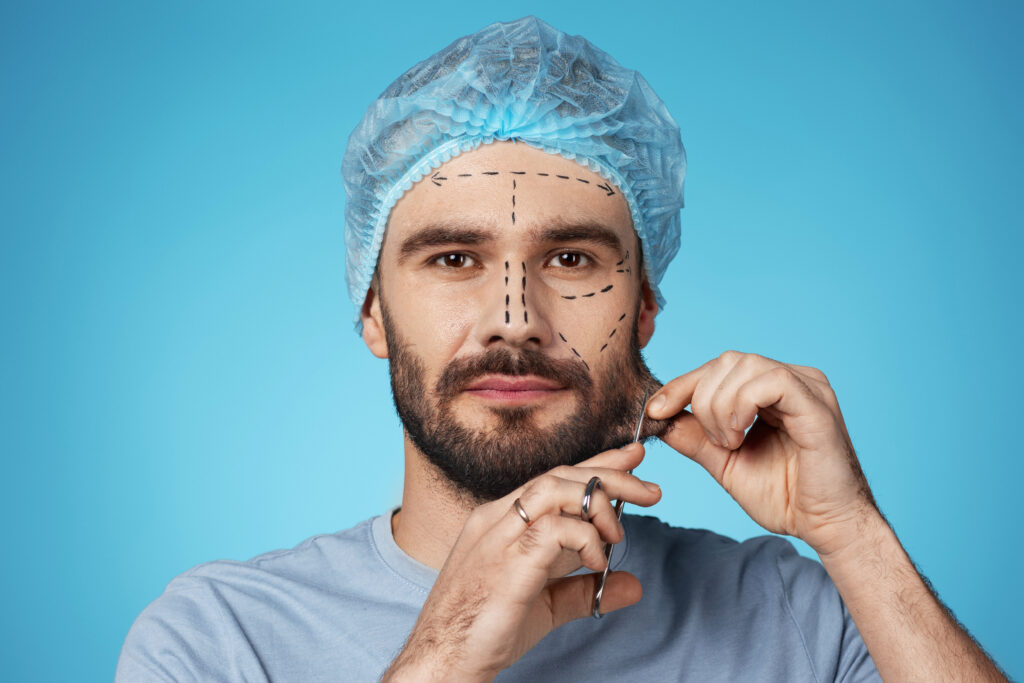
A custom facial implant is designed for long-term use, but choosing one does not mean keeping the same implant for life. Facial implant removal is possible, and some patients have their original implant replaced with a different design. The procedure can be more complicated than the first surgery, depending on the implant, its fixation and changes in the surrounding tissues. [1] [2]
People seek revision for different reasons. Some want to change their chin or jaw shape, while others experience displacement, asymmetry or medical complications. Published clinical studies describe implant removal, replacement and, in some patients, repeated revision procedures. [1] [2]
Key takeaways
- Facial implants can often be removed or replaced, although the difficulty varies between patients.
- Changing aesthetic preferences, asymmetry, infection and displacement are recognized reasons for facial implant revision.
- Standard PEEK has limited intrinsic bone-binding activity, while modified PEEK and porous titanium are designed to encourage greater bone integration. This may affect revision surgery, but direct comparative evidence is limited.
- Replacement can sometimes take place during implant removal. An unresolved infection may require removal followed by a later procedure.
Why someone might want a different implant
Changing the size or shape
An implant can remain correctly positioned while the patient becomes dissatisfied with its appearance. Someone might want less chin projection, wider jaw angles or a smaller cheek contour. Others may find that the original result does not match what they expected.
These concerns appear in the surgical literature. In a study of 22 patients undergoing secondary cheek implant surgery, Yaremchuk described asymmetry and contours considered too wide, large, low or prominent. One patient requested another revision and later had the implant removed. [1]
Patients considering their first implant may also want to discuss what future changes could involve. Facial Nexus can connect them with an independent implant designer and surgeon to review the proposed design and available options.
When there is a medical problem
Complications can also lead to revision. Implant displacement, infection, exposure and changes in the underlying bone are documented problems in facial implant surgery. [2] [3] [4]
A 2026 study of complications involving silicone chin implants described patients with displacement, bone resorption and dissatisfaction. Revision plans included implant removal with genioplasty, orthognathic surgery, custom implant placement or repositioning and fixation. [2]
Not every complication requires implant removal. The appropriate treatment depends on the problem, its severity and the condition of the surrounding tissues. [2] [4]
What happens to the tissue around an implant?
Capsules and scar tissue
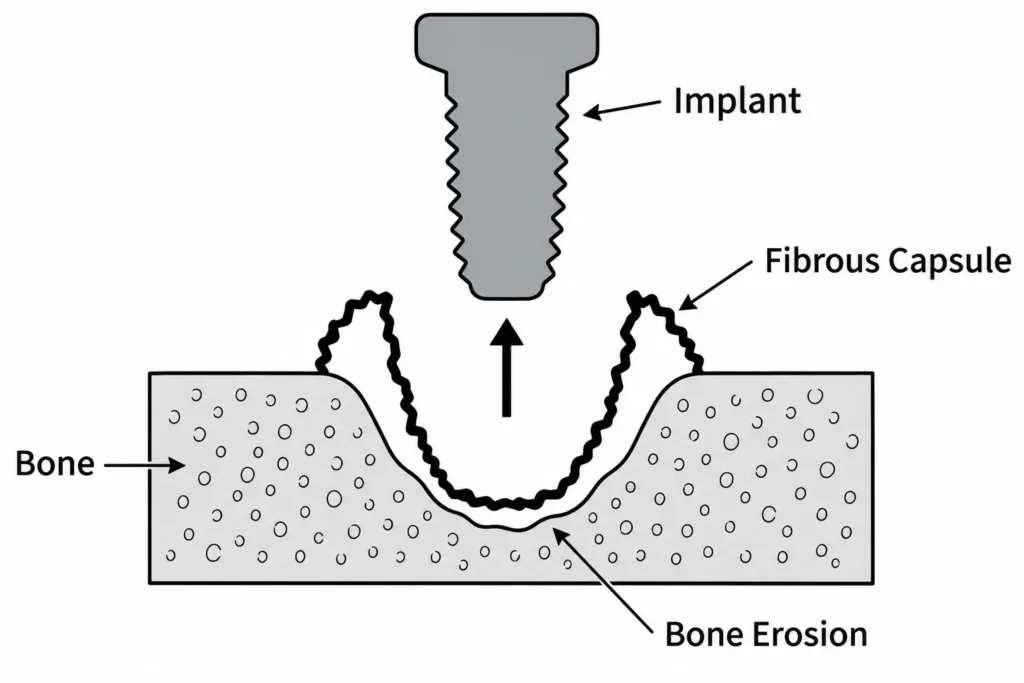
The body responds to an implanted material by forming tissue around it. Solid silicone implants can become surrounded by fibrous tissue, often described as a capsule. Scar tissue and other changes around the implant may influence subsequent surgery. [1] [2]
Yaremchuk reported that removing cheek implants during secondary operations could reveal depressions caused by bone erosion and soft-tissue contraction. His revision approach sometimes combined implant replacement with repositioning of the cheek tissues. [1]
Removing an implant therefore does not always restore the face to its exact previous shape. The result depends partly on changes that occurred while the implant was in place.
Bone changes are particularly relevant when planning replacement. A review of facial implant materials identified bone resorption and erosion among the complications reported with silicone implants. [3]
Does the implant material affect removal?
Standard PEEK
PEEK implant removal is worth discussing when choosing a custom implant.
Standard, unmodified PEEK is relatively bio-inert and has limited intrinsic ability to encourage direct bone integration. This is one reason researchers have investigated ways to modify its surface. [5]
However, limited bioactivity does not mean that bone formation around PEEK is impossible. In a preliminary clinical study of 28 patients receiving custom PEEK facial implants, follow-up CT imaging in three patients showed bone forming around the implants and within designed holes. [6]
The implant’s geometry, fixation and surrounding tissue may all affect removal. Although the material’s characteristics suggest possible differences in surgical handling, clinical studies have not established that standard PEEK is consistently easier to remove than other facial implant materials.
Bioactive PEEK
Bioactive PEEK refers to PEEK modified to encourage interaction with surrounding tissues, particularly bone. Researchers have investigated hydroxyapatite coatings, titanium coatings and porous surface structures to improve osseointegration. [5]
A 2024 systematic review found promising results for these modifications in related fields but identified no clinical reports of coated or modified PEEK used for facial reconstruction or aesthetic augmentation within its search period. [5]
Stronger bone attachment could make separation more demanding during revision, but this remains a theoretical consideration. The available evidence does not establish that bioactive PEEK facial implants are harder to remove.
Silicone
Silicone implant removal is an established procedure. Published revision studies describe removal of silicone cheek and chin implants, sometimes followed by replacement or another corrective operation. [1] [2]
Solid silicone can become surrounded by fibrous tissue, and previous implantation may be associated with changes in the underlying bone. Removing the material does not necessarily correct those changes. [1] [2]
The surgeon may need to address the surrounding tissues or skeletal contour during the same operation or through additional treatment.
Titanium
Titanium implant removal also depends on the implant’s design and relationship with bone.
Porous titanium structures can encourage bone ingrowth. Research on orthopedic implants shows that pore characteristics influence the extent of bone formation within the material. [7]
This raises the possibility that a porous implant with substantial bone ingrowth could require more extensive separation during removal. However, orthopedic bone-ingrowth findings cannot establish how difficult it will be to remove an aesthetic facial implant.
Smooth and porous titanium implants may behave differently. There is currently insufficient comparative clinical evidence to rank titanium, silicone, standard PEEK and modified PEEK reliably by ease of facial implant removal. [3] [5] [7]
Can the old implant and new one be exchanged in one surgery?
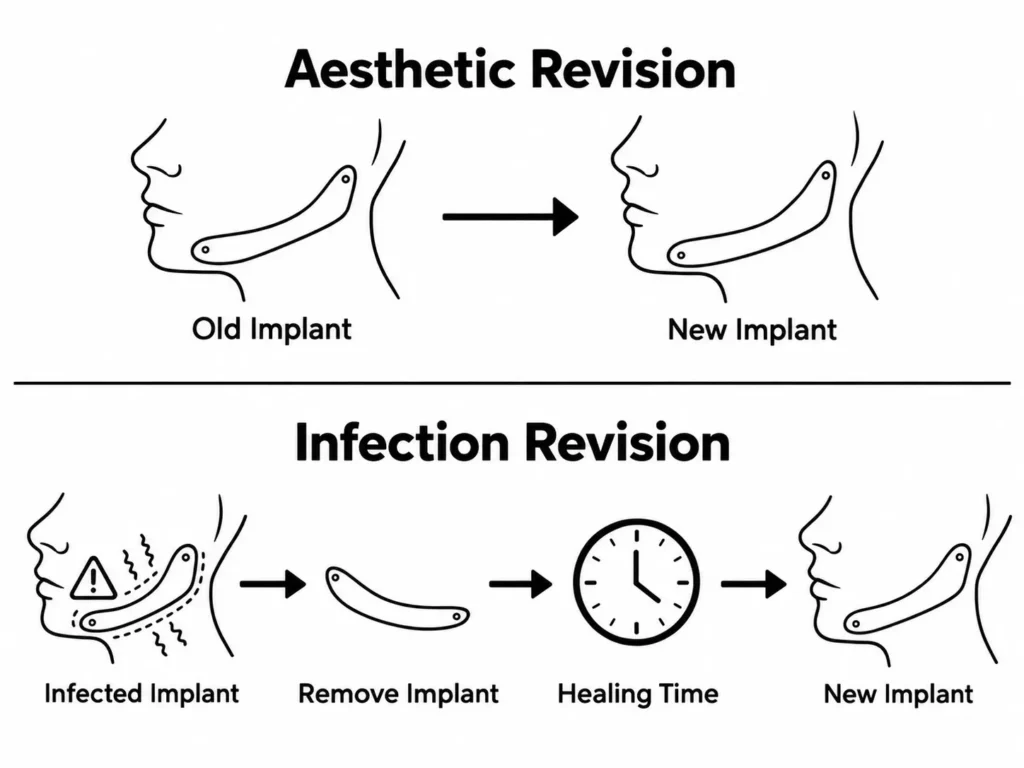
Sometimes, yes. Yaremchuk’s secondary cheek implant study described removing existing implants and replacing them during the same operation. Some patients also underwent cheek tissue repositioning to address changes associated with the original implants. [1]
Silicone chin implant revision reports likewise describe corrective plans involving removal and placement of custom implants. [2]
Infection can change this approach. A review of infected facial implants described how persistent infection and biofilm formation may make treatment difficult. Implant removal may be necessary when attempts to control the infection fail. [4]
Johns Hopkins Medicine also advises that an unresolved facial implant infection may require temporary removal, with replacement considered later. [8]
For this reason, a planned custom facial implant replacement for an aesthetic change is different from surgery to treat an infected implant. The surgeon must assess whether immediate replacement is appropriate.
Why new imaging matters for replacement
Designing for the face as it is now
An older implant was made for the anatomy assessed before the original procedure. Bone changes, implant displacement or previous surgical treatment may affect what a new design needs to address. [1] [2]
Updated CT imaging can help the surgeon assess the current anatomy. Published custom PEEK implant workflows have used high-resolution CT scans to design patient-specific implants. [6] [9]
With 3D implant planning, a proposed replacement can be designed around the patient’s current bony structure. Computer-assisted planning also allows the designer and surgeon to assess implant geometry and intended facial contours before surgery. [9]
The aim may be to change chin projection, alter jaw-angle dimensions or correct an unsatisfactory contour. The surgeon decides what can safely be achieved.
Facial Nexus can coordinate the connection with an independent implant designer and surgeon when a patient is considering replacement of an existing implant. The surgeon remains responsible for the medical assessment, imaging decisions and surgical treatment.
The bottom line
Custom facial implants are intended for long-term use, but they can often be removed or replaced. Some patients undergo more than one revision over time. Published surgical studies describe removal for aesthetic dissatisfaction, displacement and complications affecting the implant or surrounding tissues. [1] [2]
The complexity depends on implant design, fixation, tissue changes and the reason for revision. Material properties can influence these considerations, although evidence directly comparing removal difficulty remains limited. [3] [5] [7]
Patients interested in a future replacement should discuss these factors with a qualified surgeon rather than assuming that removal will always be straightforward.
Facial Nexus can connect patients with an independent implant designer and surgeon to review their existing implants and possible alternatives. The team can also coordinate non-medical travel and recovery arrangements.
Frequently asked questions
Can my custom facial implant be removed completely?
In many cases, the entire implant can be removed. Published revision procedures confirm that complete implant removal is possible, although scar tissue and underlying bone changes may remain. Removal does not guarantee a return to the previous facial contour. [1] [2]
Can I replace an implant with a smaller or larger one?
Yes, selected patients can undergo replacement with a different implant size or contour. Revision studies describe replacement with implants chosen to address the patient’s current anatomy and desired correction. [1] [2]
Is PEEK easier to remove than titanium?
Standard PEEK has limited intrinsic osseointegration, while porous titanium can encourage bone ingrowth. These differences may affect revision surgery, but direct clinical comparisons have not established that PEEK facial implants are consistently easier to remove. [5] [6] [7]
Can an infected implant be replaced immediately?
It depends on the severity of infection and the surrounding tissues. Persistent infection may require removal followed by delayed replacement. A surgeon must determine when another implant can safely be placed. [4] [8]
References
- Yaremchuk MJ. Secondary malar implant surgery. Plast Reconstr Surg. 2008;121(2):620-628. doi:10.1097/01.prs.0000298094.57441.63. PubMed
- Pokrowiecki R. Revision surgery after complications of silicone chin implants. J Clin Med. 2026;15(4):1326. doi:10.3390/jcm15041326. Full text
- Kauke-Navarro M, Knoedler L, Baecher H, Sherwani K, Knoedler S, Allam O, et al. A systematic review of implant materials for facial reconstructive and aesthetic surgery. Front Surg. 2025;12:1548597. doi:10.3389/fsurg.2025.1548597. PubMed
- Kauke-Navarro M, Knoedler L, Knoedler S, Deniz C, Safi AF. Surface modification of PEEK implants for craniofacial reconstruction and aesthetic augmentation: fiction or reality? Front Surg. 2024;11:1351749. doi:10.3389/fsurg.2024.1351749. PubMed
- Saponaro G, Todaro M, Barbera G, Scivoletto G, Foresta E, Gasparini G, et al. Patient-specific facial implants in polyetheretherketone and their stability: a preliminary study. Ann Plast Surg. 2023;90(6):564-567. doi:10.1097/SAP.0000000000003527. PubMed
- He S, Zhu J, Jing Y, Long S, Tang L, Cheng L, et al. Effect of 3D-printed porous titanium alloy pore structure on bone regeneration: a review. Coatings. 2024;14(3):253. doi:10.3390/coatings14030253. Full text
- Mohan K, Cox JA, Dickey RM, Gravina P, Echo A, Izaddoost SA, et al. Treatment of infected facial implants. Semin Plast Surg. 2016;30(2):78-82. doi:10.1055/s-0036-1580727. PubMed
- Johns Hopkins Medicine. Chin, cheek, or jaw reshaping/facial implants. Johns Hopkins Medicine
- Guevara-Rojas G, Figl M, Schicho K, Seemann R, Traxler H, Vacariu A, et al. Patient-specific polyetheretherketone facial implants in a computer-aided planning workflow. J Oral Maxillofac Surg. 2014;72(9):1801-1812. doi:10.1016/j.joms.2014.02.013. PubMed

References
- Yaremchuk MJ. Secondary malar implant surgery. Plast Reconstr Surg. 2008;121(2):620-628. doi:10.1097/01.prs.0000298094.57441.63.[↩][↩][↩][↩][↩][↩][↩][↩][↩][↩][↩][↩]
- Pokrowiecki R. Revision surgery after complications of silicone chin implants. J Clin Med. 2026;15(4):1326. doi:10.3390/jcm15041326.[↩][↩][↩][↩][↩][↩][↩][↩][↩][↩][↩][↩][↩]
- Kauke-Navarro M, Knoedler L, Baecher H, Sherwani K, Knoedler S, Allam O, et al. A systematic review of implant materials for facial reconstructive and aesthetic surgery. Front Surg. 2025;12:1548597. doi:10.3389/fsurg.2025.1548597.[↩][↩][↩][↩]
- Mohan K, Cox JA, Dickey RM, Gravina P, Echo A, Izaddoost SA, et al. Treatment of infected facial implants. Semin Plast Surg. 2016;30(2):78-82. doi:10.1055/s-0036-1580727.[↩][↩][↩][↩]
- Kauke-Navarro M, Knoedler L, Knoedler S, Deniz C, Safi AF. Surface modification of PEEK implants for craniofacial reconstruction and aesthetic augmentation: fiction or reality? Front Surg. 2024;11:1351749. doi:10.3389/fsurg.2024.1351749.[↩][↩][↩][↩][↩][↩]
- Saponaro G, Todaro M, Barbera G, Scivoletto G, Foresta E, Gasparini G, et al. Patient-specific facial implants in polyetheretherketone and their stability: a preliminary study. Ann Plast Surg. 2023;90(6):564-567. doi:10.1097/SAP.0000000000003527.[↩][↩][↩]
- He S, Zhu J, Jing Y, Long S, Tang L, Cheng L, et al. Effect of 3D-printed porous titanium alloy pore structure on bone regeneration: a review. Coatings. 2024;14(3):253. doi:10.3390/coatings14030253.[↩][↩][↩][↩]
- Johns Hopkins Medicine. Chin, cheek, or jaw reshaping/facial implants. https://www.hopkinsmedicine.org/health/treatment-tests-and-therapies/chin-cheek-or-jaw-reshaping–facial-implants.[↩][↩]
- Guevara-Rojas G, Figl M, Schicho K, Seemann R, Traxler H, Vacariu A, et al. Patient-specific polyetheretherketone facial implants in a computer-aided planning workflow. J Oral Maxillofac Surg. 2014;72(9):1801-1812. doi:10.1016/j.joms.2014.02.013.[↩][↩]