Many facial implant patients don’t give much thought to recovery. Instead, they focus on the operation: the surgeon, the approach, the day of surgery. Then they consider the weeks that follow to be an afterthought and assume that after the implant is in place, the hard part is over. It’s not.
An excellent result can still be lost in the following weeks by an infection, poor healing, or an overtaxed body that can’t repair itself properly. Facial implant recovery is the second half of the job, and whether the work holds will depend upon it.
This is even more important when you travel for surgery, because the element that most often goes wrong when you do so is not the operation. It is the aftercare.
Key Takeaways
- The most common post-operative complication with cosmetic surgery is infection. The biggest structural problem with the global cosmetic surgery industry is aftercare because follow-up care is often neglectful and rarely includes the operating surgeon.
- Psychological stress measurably slows wound healing after surgery, because it suppresses the immune system signals your body needs to repair tissue
- After jaw or chin surgery, you can’t chew normally, so protein and key nutrients from a soft or liquid diet are what keep healing on track, not an optional extra
- Swelling resolves over weeks and months, not days, so realistic expectations and close monitoring are worth more than any promise of a miracle two-week turnaround
The importance of a recovery plan
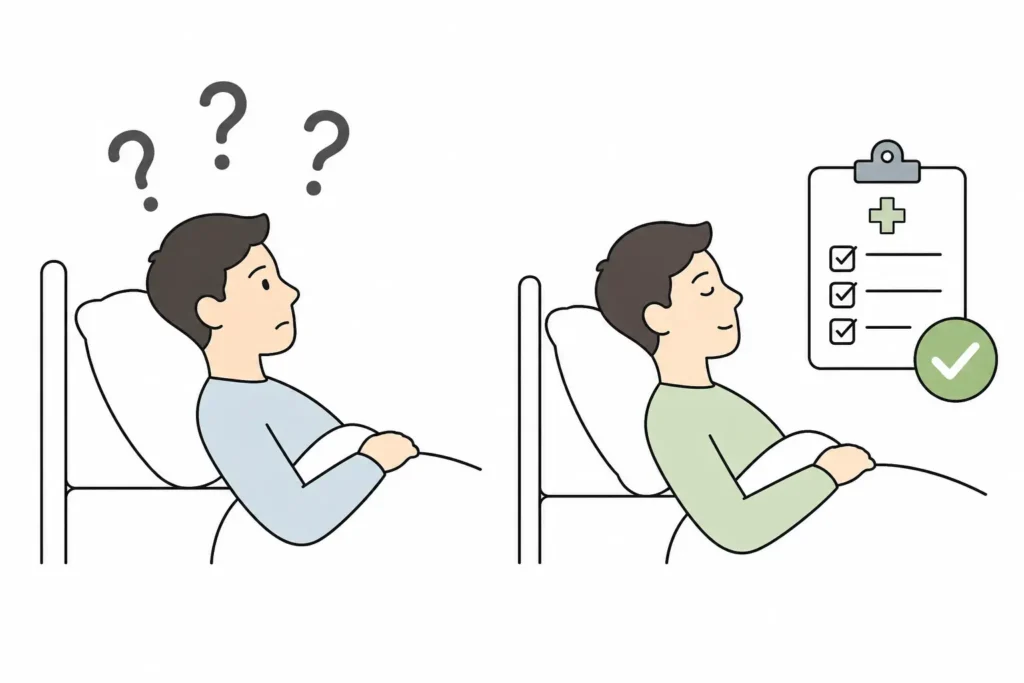
There’s a pattern in cosmetic surgery tourism, and it’s not primarily bad surgery. A review of patients who were treated after complications from surgery abroad found that infection was the most common problem (often requiring another surgery or intravenous antibiotics) and that post-operative care was frequently neglectful and rarely involved the surgeon who did the operation [1].
Patients are sent home to a hotel to recuperate from surgery with their medical issues alone in a foreign country. That’s the gap, not the scalpel, where a good result tends to unravel.
What structured aftercare sets out to fix
Structured aftercare exists to close exactly that gap. Good facial implant recovery requires a plan that covers the few things known to shape how you heal. The rest of this article is what that plan addresses, and why each piece is backed by evidence rather than marketing.
The risk of infection
Because infection is one of the most common things that go wrong, preventing it is the first job of good aftercare. Prevention is not exotic. It is a sterile surgical technique and standard perioperative antibiotic cover during the procedure itself.
Catching problems early with daily monitoring
The part that fails abroad is what comes afterward. Close monitoring means early warning signs like a rising temperature or unusual, worsening swelling are caught before they threaten the implant. A patient watching alone in a hotel room rarely knows what is normal. Someone checking on them daily does, and that difference is often what separates a minor issue managed early from an emergency managed too late.
Why jaw and chin surgery puts nutrition at risk
Solid food is often not an option for weeks after jaw/chin work. Nutrition becomes a silent healing risk factor that I believe needs to be mitigated and not sold as a wellness add-on.
A literature review revealed that poor pre/post nutritional status is associated with an increased number of post-operative complications/infections, and good perioperative nutritional support was associated with better surgical wound healing and reduced complications [2].
What a healing-focused diet looks like
Wound healing runs on protein and on nutrients like vitamin C and zinc. If your intake collapses because everything hurts to eat, healing slows with it. The honest version of this is that special shakes do not accelerate you past normal biology. It is the planned, high-protein soft or liquid diet that stops you from falling into a deficit that would drag healing backward.
When you physically cannot cook or chew, having those meals sourced and prepared for you is the difference between adequate nutrition and none.
How stress delays healing
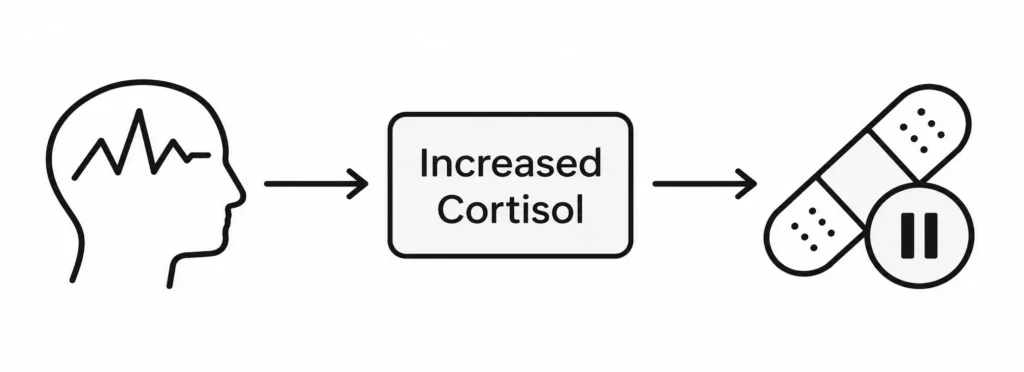
The thing people tend to overlook the most, but the one that has some of the best science behind it, is stress. Psychological stress before surgery has been shown to predict impaired wound repair in the first few days after surgery, as well as increased pain and delayed recovery in a group of surgical patients [3].
Stress increases cortisol, and cortisol suppresses the inflammatory signals and immune cells that are needed for the first phase of the wound healing process [4]. If the initiation of the healing process is delayed, the whole timeline of facial implant recovery gets pushed back.
Why recovering alone abroad makes it worse
Now picture the opposite of a calm recovery, which is lying awake alone in a foreign hotel, wondering whether your swelling is normal or a disaster. That anxiety is physiologically working against your result. Reducing it, with support and reassurance, is a legitimate part of healing well rather than a soft add-on.
A realistic facial implant recovery timeline
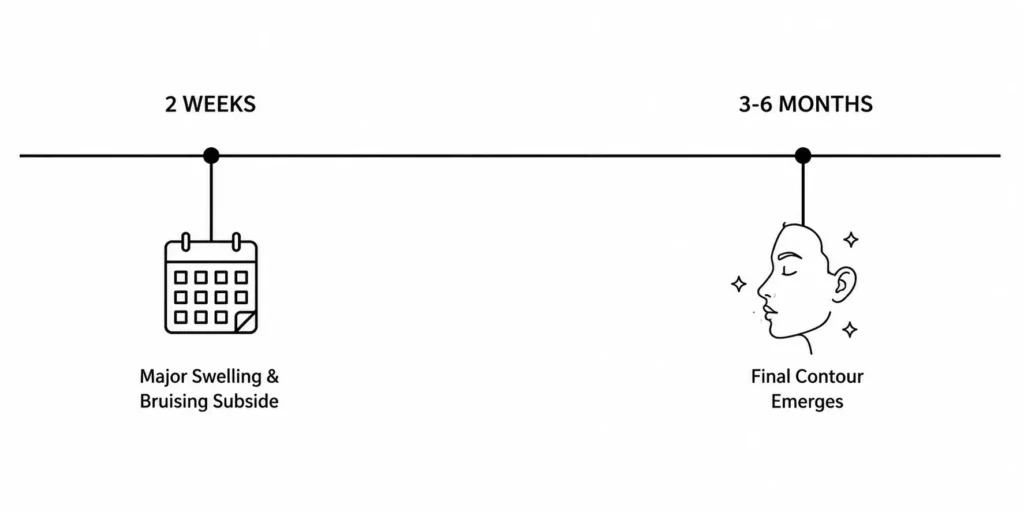
Here is where honesty matters most, because the internet is full of miracle timelines. Recovery from facial bone or implant surgery is not compressed into a tidy fortnight. Bruising and the worst of the swelling do ease over the first couple of weeks, so many people look presentable by then, but the swelling continues to settle gradually and the final shape can take months to fully emerge.
Why close monitoring matters in the first weeks
What is really a big help in that window is not a shortcut but supervision. Someone monitoring your progress, reassuring you about what’s normal, and alerting you to what’s not means you don’t panic over normal swelling and don’t shrug off a real problem. That supervision is the unsung power of a good recovery.
What guided recovery actually looks like
Guided recovery amounts to care that attends to each one deliberately instead of leaving it to chance.
In the real world, that translates into dependable transportation to every post-op appointment, high-protein soft foods waiting for you when chewing is challenging, assistance in keeping medication and oral-hygiene schedules on time to reduce infection risk, direct access to the treating surgeon, and a person monitoring swelling and temperature fluctuations day-to-day. It’s not glamorous work.
Each element aligns to one of the three things that actually drive recovery:
- Infection prevention
- Nutrition maintenance
- Stress reduction
For someone recuperating from cosmetic surgery overseas, that infrastructure means the difference between supported and solitary healing.
The bottom line
The operation is a single day. Your result is built in the weeks that follow it, and that is precisely the stretch most patients plan for least, and most clinics support worst. The evidence is consistent: infection is the main thing that goes wrong, nutrition and stress measurably shape how you heal, and swelling takes real time to resolve. A facial implant recovery that you are guided and supported through protects the money and risk you already put into the surgery.
If you are worried about the recovery, Talk to Facial Nexus about the recovery plan before you book anything.
Frequently asked questions
How long does recovery from facial implants really take?
Longer than miracle timelines would have you believe. Heaviest bruising and swelling tend to resolve in the first two weeks, leaving many patients looking decent by that point. But swelling continues to resolve slowly over time, and can take months for the final contour to fully manifest. Expecting this and planning accordingly, rather than thinking you’ll be done in two weeks, is key.
Does stress actually affect healing, or is that a stretch?
It genuinely affects it. Higher stress before surgery has been shown to impair early wound repair and slow recovery, because stress hormones suppress the immune signals that healing depends on. It is one of the more evidence-backed reasons that feeling supported, rather than anxious and alone, is worth taking seriously during recovery.
Why should I care about nutrition if it’s my face having surgery?
Your recovery anywhere in your body relies on nutrients, and your jaw/chin is no exception. Because jaw or chin surgery makes it difficult or painful to eat when your body needs fuel the most, poor nutrition is associated with a higher complication/infection risk following surgery.
Proper protein intake and micronutrients play an important role in post-operative healing. Planning for a soft/high-protein liquid diet will keep you from being in a deficit when you are unable to chew.
What is the biggest risk of recovering from surgery abroad?
The aftercare gap. The most common complication in cosmetic surgery tourism is infection, and the recurring weakness is that post-operative care is often neglected and rarely involves the operating surgeon. A structured recovery plan with real monitoring and a direct line back to your surgeon is what closes that gap.
References
- Venditto C, Gallagher M, Hettinger P, Havlik R, Zarb R, Argenta A, Doren E, Sanger J, Klement K, Dzwierzynski W, LoGiudice J, Jensen J. Complications of cosmetic surgery tourism: case series and cost analysis. Aesthet Surg J. 2021;41(5):627-634.[↩]
- Seth I, Lim B, Cevik J, Gracias D, Chua M, Kenney PS, Rozen WM, Cuomo R. Impact of nutrition on skin wound healing and aesthetic outcomes: a comprehensive narrative review. JPRAS Open. 2024;39:291-302.[↩]
- Broadbent E, Petrie KJ, Alley PG, Booth RJ. Psychological stress impairs early wound repair following surgery. Psychosom Med. 2003;65(5):865-869.[↩]
- Glaser R, Kiecolt-Glaser JK, Marucha PT, MacCallum RC, Laskowski BF, Malarkey WB. Stress-related changes in proinflammatory cytokine production in wounds. Arch Gen Psychiatry. 1999;56(5):450-456.[↩]