You chose a premium procedure. You were dazzled by the glossy gallery, the breezy consultation, the promise of a sharper jaw or stronger chin. Then the swelling went down, and the result looked flat, uneven, or just plain wrong. It happens more often than marketing brochures will tell you, and suboptimal facial implant results are usually due to a small number of avoidable factors, not simple misfortune.
The luxury look tells you what you can expect, but not how it’s achieved. This article explains where things can go wrong, what the data shows, and how a better process reduces your risk.
A bad result is rarely a spectacular disaster. More typically it is a quiet disappointment. The implant is off center. One side of the jaw is fuller than the other. The chin sticks out too far or not far enough. Edges can be felt under thin skin.
The number one complaint that returns a woman to the operating room for breast revision surgery is visible or felt asymmetry. Other common complications include implant shifting, palpable edge and facially discordant contour.
A minority of women experience facial implant complications such as infection or nerve irritation, but these are less common than dissatisfaction with the cosmetic result. None of these issues mean implants do not work. They typically mean that something about the fit or placement was off.
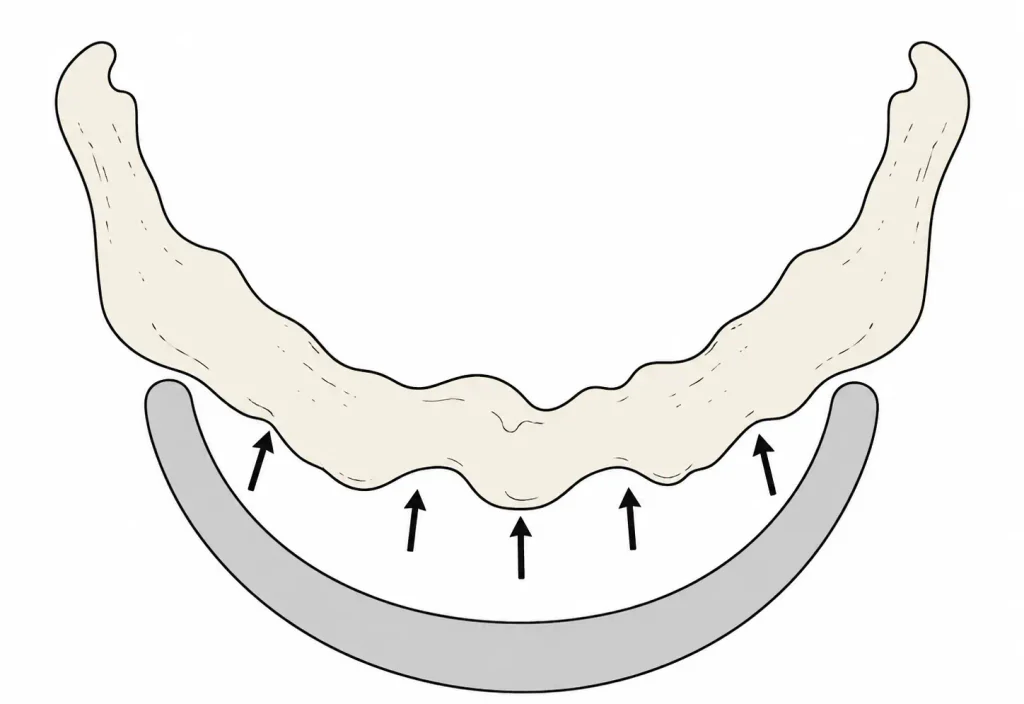
The face is not a standard shape. Bone form, thickness, and symmetry vary from person to person and often side to side within a person. Off-the-shelf facial implants are available in preset sizes and shapes, so the surgeon has to fit a stock piece to a unique surface.
When an implant does not seat flush against bone, small gaps and rocking can follow, which can contribute to movement, uneven projection, and a shape that reads as slightly wrong [1]. Surgeons often trim or reshape stock implants during the operation to improve fit, and each adjustment adds time and variability.
Custom implants take a different route. They are designed from the patient’s own CT scan to match the bone surface, which improves contact and can reduce the guesswork of on-table carving [2]. Better contact is one reason custom facial implants are associated with predictable positioning in the planning literature.
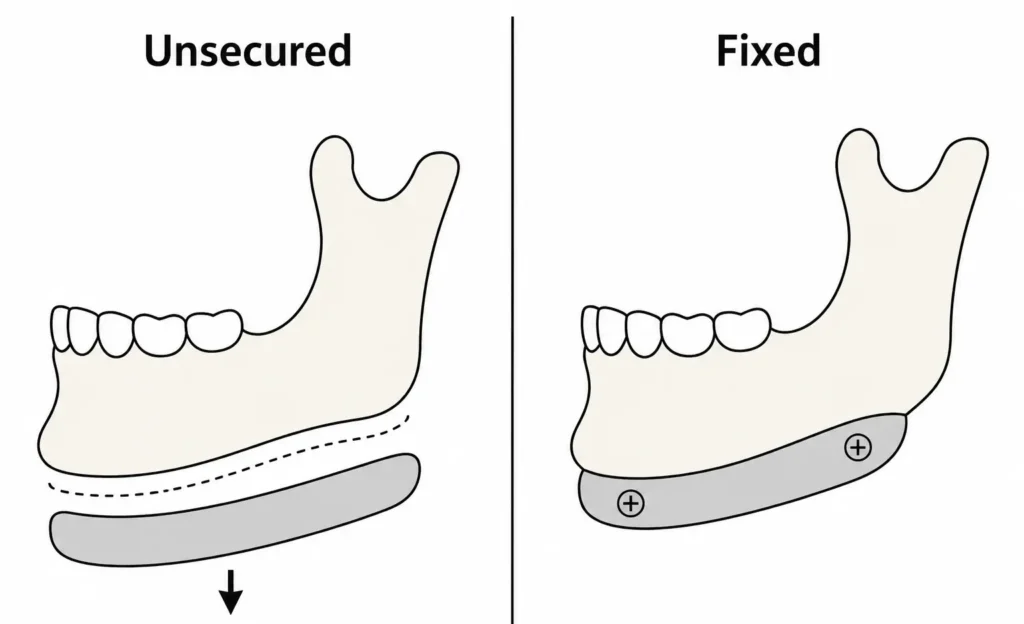
Whether stock or custom, an implant that is not fixed well can shift. Screw fixation to bone is widely used to hold position, and poor fixation is a recognized route to malposition and later facial implant asymmetry [3]. Movement in the early healing window is a problem because the final look depends on the implant staying exactly where the plan intended.
Two implants of identical quality can produce very different results depending on planning and technique. The material rarely fails on its own. The plan and the placement carry most of the outcome.
Modern workflows use CT-based, three-dimensional planning to map bone and design or select an implant before surgery [4]. Skipping detailed planning means decisions get made in the operating room under time pressure.
Virtual surgical planning has been reported to improve accuracy and consistency in craniofacial reconstruction, which is the same accuracy problem cosmetic implants face [2]. Careful planning is not a luxury add-on. It is where a lot of the result is decided.
Skill is not distributed equally. In all surgical subspecialties, higher surgeon and hospital volume correlate with decreased complication rates and improved outcomes [5]. Placement of facial implants can be very technically challenging, in particular around the jaw where nerves and size of dissection can play a factor.
A surgeon that does these procedures on a frequent basis will be much better equipped to seat, fix, and refine an implant appropriately. This is why choosing a facial implant surgeon based on experience (not price or marketing) alters your probabilities.
A disappointing first result is not just an aesthetic issue. It sets up a harder second operation.
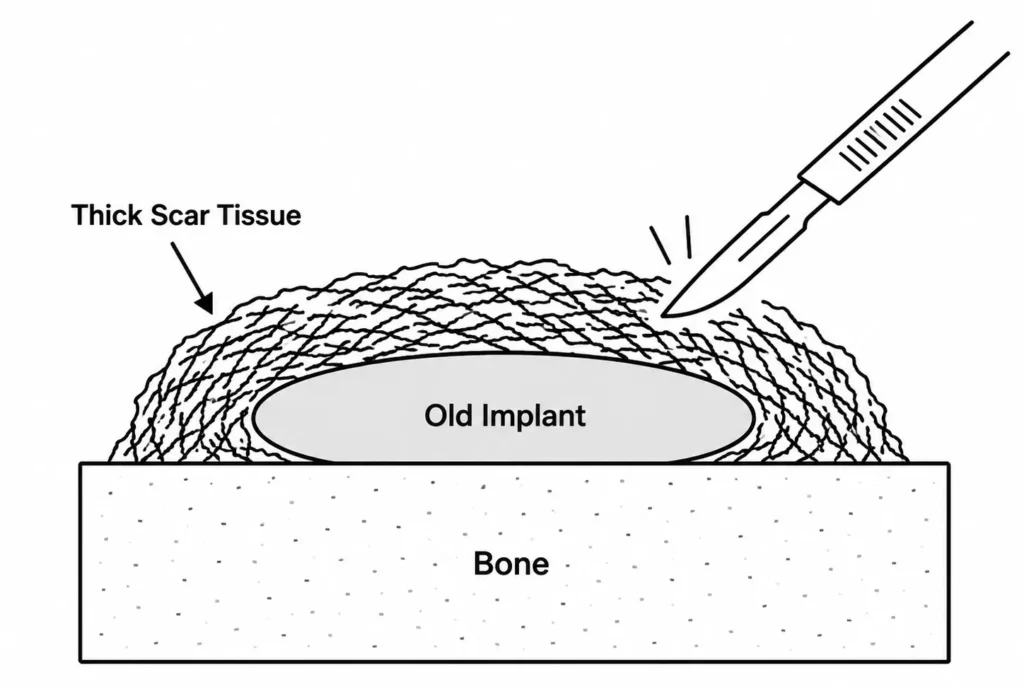
After tissues heal around an implant scar tissue forms, and anatomy is altered. When removal or repositioning of an implant is followed by contour correction the procedure is often more difficult than the primary one, with a new set of potential risks involved. (3,4)
Facial implant revision surgery is a legitimate field of work because first time malposition and asymmetry are frequent enough that correction of such issues is required. (4) Revision surgery can be a success, but should be avoided. That means planning the facial implant fit and placement correctly, and using an implant that complements the bone, by a surgeon who regularly does this procedure.
Luxury provides the illusion of perfection while obscuring the effort that goes into creating it. Most subpar facial implant cases come from a stock implant that won’t fit, a plan that’s too thin, or a surgeon who hasn’t done enough reps, all three of which are avoidable with due diligence BEFORE you step foot in the OR. Custom design from a CT scan, actual surgical planning, and an experienced surgeon are the variables that change the probability in your favor.
Facial Nexus exists in this very gap by pairing you with an independent implant designer and an independent maxillofacial surgeon who plan your case around your anatomy, then organizing your recovery and support around the surgical work. If you want your results built on fit and not marketing speak, book your Facial Nexus consultation to start with a plan that is made for your face.
Asymmetry usually comes from an implant that does not seat flush against uneven bone, or from a shift before it heals in place. Faces are naturally uneven side to side, so a stock implant that ignores that often looks off. Design matched to a CT scan and secure fixation lower this risk.
The evidence is that custom facial implants make better contact with the patient’s bone surface, and do not require on-table carving for fit as much as off-the-shelf implants. Off-the-shelf implants are often good results in the hands of an experienced surgeon who can mold the stock implant to that patient’s unique anatomy, but it requires the surgeon to retrofit the stock implant design to a unique face..
A great deal. High surgical volume is consistently correlated with low rates of complications in all surgical specialties, and facial implant placement is a technical, repeatable surgical skill. A poorly placed even the best implant still has a poor result, so surgeon experience is as important as implant quality.
Often, but revision surgery is more difficult than primary surgery due to scar tissue and distortion of anatomy, and revision surgery has its own risk of complications. Revision of facial implants, to address malposition and asymmetry for example, can achieve good results but it is much safer to get fit and planned correctly the first time.